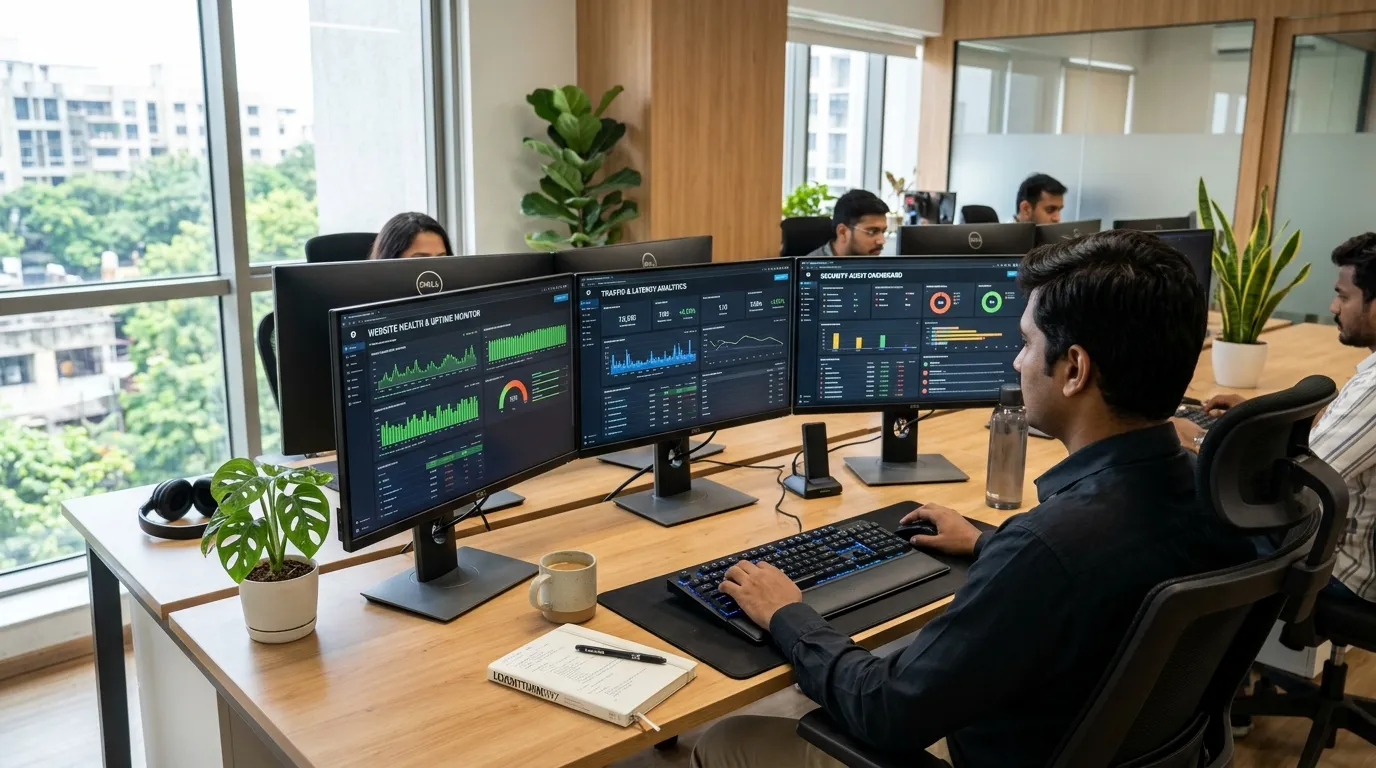
What Factors Determine Website Maintenance Cost in India?
Website maintenance cost in India is determined by the underlying software stack, the frequency of content updates, server infrastructure requirements, and the level of technical support your organization demands. A basic informational site requires periodic backups and domain renewals, whereas an active e-commerce store or custom web application demands continuous database optimization, security monitoring, and regular feature updates. Rather than fixed price tags, maintenance expenditures reflect the engineering hours required to keep a web platform fast, secure, and accessible.
For organizations operating digital platforms, securing professional website maintenance guarantees that technical vulnerabilities are patched before outages occur, protecting brand credibility and search rankings. Treating website upkeep as a planned operational safeguard preserves your initial web development investment and prevents catastrophic downtime during peak sales cycles.
Examining what goes into a structured website maintenance program clarifies where ongoing technology budgets are deployed and helps business owners choose the right service model.
Maintenance Scope Across Website Types
Different types of digital properties carry distinct operational risks and maintenance requirements. Upkeep demands vary substantially across static websites, dynamic content management systems, and high-transaction e-commerce stores.
1. Static Informational and Corporate Brochure Websites
Static websites built with HTML, CSS, and modern static site generators have no active database or server-side execution layer. Consequently, they possess the lowest maintenance overhead in the industry.
- Annual domain registration renewal and DNS record management.
- SSL certificate verification and automated renewal monitoring.
- Periodic contact form routing checks and mail server deliverability verification.
- Occasional business detail updates, such as office addresses, phone numbers, or team bios.
Because static websites lack plugins and databases, they rarely experience security breaches or software compatibility conflicts. Routine checks take only a few hours per quarter.
2. Dynamic CMS Platforms (WordPress, Drupal, Joomla)
Websites powered by content management systems like WordPress require structured, frequent technical attention. Because CMS platforms rely on an interconnected ecosystem of core software, third-party themes, and external plugins, failing to maintain them leads to software conflicts and security vulnerabilities.
- Regular core updates, theme updates, and plugin patch deployments.
- Staging environment testing prior to applying major updates on live production servers.
- Automated daily or weekly database backups stored in isolated off-site cloud storage.
- Database table cleanup to remove post revisions, expired transient cache, and spam comments.
- Spam form filtering and security firewall monitoring to block brute-force login attempts.
CMS maintenance requires regular oversight. Neglecting updates for even a few months leaves sites susceptible to automated malware injection and broken visual layouts.
3. E-Commerce Stores (WooCommerce, Shopify, Custom Portals)
E-commerce platforms process transactions, handle sensitive customer information, and synchronize live product inventory. Any technical failure directly impacts business revenue.
- End-to-end checkout flow testing, payment gateway API verification, and webhook monitoring.
- Product database indexing to ensure search queries and category filters resolve rapidly.
- Cart performance optimization and abandoned checkout script verification.
- Customer privacy compliance and security audit logging for payment processors.
- Third-party shipping and SMS notification API integration monitoring.
E-commerce maintenance demands weekly or bi-weekly technical sprints. High transaction volumes require active server monitoring to prevent slowdowns during promotional sales and seasonal traffic spikes.
4. Custom Web Applications and SaaS Platforms
Custom applications built with frameworks like Laravel, Node.js, React, or Python operate under specialized operational parameters. These platforms require direct developer involvement rather than standard CMS administration.
- Server operating system security updates and container orchestration maintenance.
- API endpoint latency tracking and database query optimization.
- Third-party SDK upgrades and library deprecation refactoring.
- Continuous integration and deployment (CI/CD) pipeline management.
- Error log review to identify and resolve unhandled runtime exceptions.
Custom web applications require dedicated developer support retainers to maintain uptime, enforce data protection standards, and deploy ongoing minor feature improvements.
Website Maintenance Service Models: Comparison Table
Organizations in India typically select between four primary maintenance arrangements based on internal team capabilities and technical complexity.
| Maintenance Model | Service Scope | Response Time | Best Suited For | Cost Predictability |
|---|---|---|---|---|
| Ad-Hoc / Pay-as-You-Go | On-demand bug fixes and emergency repairs | Variable (24 to 72 Hours) | Small static websites with rare updates | Unpredictable; paid per developer hour |
| Basic Monthly Retainer | Security patches, cloud backups, uptime monitoring | Next Business Day (12 to 24 Hours) | Standard business websites, corporate blogs | High predictability with fixed monthly fees |
| Comprehensive Growth Retainer | Security, technical SEO, speed audits, content updates | Same-Day (4 to 8 Hours) | Lead generation sites, growing business portals | Predictable monthly investment with dedicated hours |
| Dedicated Enterprise SLA | 24/7 server monitoring, custom feature sprints, DevOps | Priority (1 to 2 Hours) | High-volume e-commerce, SaaS, mission-critical apps | Enterprise contract tailored to dedicated engineering allocation |
As detailed above, pay-as-you-go arrangements offer low initial commitments but leave businesses vulnerable during critical outages. Monthly retainers provide predictable operational expenses and guaranteed developer availability when urgent issues arise.
Core Tasks Included in a Comprehensive Website Maintenance Plan
A professional maintenance agreement encompasses several engineering disciplines designed to protect availability, performance, and user trust.
1. Cybersecurity Monitoring and Vulnerability Patching
Automated web scrapers and malicious bots continuously scan websites for known exploits in outdated software libraries. A structured maintenance routine includes deploying security patches promptly, updating server SSL certificates, configuring Web Application Firewalls (WAF), and conducting malware scans. In the event of a security incident, immediate isolation and clean restore protocols minimize exposure.
2. Automated Cloud Backups and Disaster Recovery Protocols
Data loss can occur from server hardware failures, corrupted database tables, or accidental human deletion. Professional maintenance ensures automated backups run on scheduled daily or weekly intervals. Backups must be verified regularly through test restorations and stored in physically separated cloud environments like Amazon S3 or Google Cloud Storage.
3. Performance Optimization and Core Web Vitals Auditing
Website performance naturally degrades over time as team members upload high-resolution images, embed tracking scripts, and add third-party plugins. Ongoing maintenance includes auditing Core Web Vitals, optimizing media files, minifying CSS and JavaScript assets, clearing server cache directories, and tuning database queries to maintain rapid page speeds.
4. Technical SEO and Broken Link Remediation
Restructuring web pages, updating service offerings, or removing obsolete blog posts often creates broken hyperlinks (404 errors) and redirect chains that waste search crawl budgets. Maintenance engineers audit crawl logs, establish proper 301 redirects, update XML sitemaps, and fix canonical tags to protect accumulated organic search equity.
5. Content Updates and Visual Layout Adjustments
Keeping a digital presence relevant requires publishing regular announcements, adjusting service pricing, updating case studies, and adding new team credentials. Maintenance plans typically include allocated monthly developer hours to deploy visual refinements, banner swaps, and content formatting adjustments without requiring separate project agreements.
Hidden Risks and Consequences of Neglecting Website Maintenance
Postponing website maintenance to save operational capital often produces severe long-term financial consequences that far exceed the cost of routine upkeep.
Search Engine Penalties and Ranking Drops
Search engines prioritize websites that offer fast, reliable, and secure user experiences. If a website suffers frequent server timeouts, exhibits slow Largest Contentful Paint times, or triggers malware warnings in search results, search algorithms demote its rankings in favor of healthier competitors.
Reputational Damage and Lost Business Revenue
A non-functional checkout gateway, broken contact form, or visual display bug creates an immediate impression of unprofessionalism. When prospective clients encounter broken pages or receive browser security warnings, they navigate away to competitors, directly eroding customer acquisition investments.
Exorbitant Emergency Repair Expenses
Hiring developers on an emergency basis to recover a hacked server, untangle corrupted database tables, or clean malware injections is significantly more expensive than paying for routine monthly maintenance. Emergency remediation often takes several days, during which all digital advertising and inbound marketing remain paralyzed.
How to Optimize Your Website Maintenance Budget
Business owners can keep maintenance commitments efficient by adopting proactive management practices.
- Select a Modern, Lean Technology Stack: Building websites with clean code and minimal third-party plugin dependencies reduces ongoing vulnerability patching and regression testing hours.
- Utilize Staging Environments for Updates: Testing major software upgrades on a clone server before pushing changes live prevents unexpected production downtime.
- Implement Reliable Cloud Infrastructure: Premium cloud hosting providers deliver built-in hardware redundancy, automated snapshots, and DDoS mitigation that reduce manual maintenance burdens.
- Consolidate Analytics and Tracking Scripts: Remove unused marketing tags, chat widgets, and redundant tracking scripts that slow down page execution and demand upkeep.
- Establish a Long-Term Maintenance Agreement: Contracting for an annual maintenance retainer generally secures lower hourly rates and dedicated developer priority compared to booking ad-hoc support hours.
Partnering with a reliable web development company in Dehradun ensures that your digital infrastructure receives structured monitoring, version control, and dependable technical care.
Protecting Your Web Assets with Techrsv
Maintaining a dependable, high-performing website requires methodical engineering discipline, reliable monitoring tools, and fast response times. Rather than waiting for critical systems to fail, proactive technical stewardship ensures that your web presence operates at peak efficiency every day.
Techrsv delivers end-to-end website maintenance, custom software support, and performance optimization from our office in Dehradun, India. Our in-house technical team manages static websites, custom WordPress implementations, e-commerce stores, and complex web applications built on React, Next.js, Node.js, Laravel, and Python. We provide transparent weekly monitoring reports, guaranteed service level response times, and dedicated developer hours to keep your business operating smoothly.
If you are seeking dependable technical care for your web platform or require an evaluation of your existing site health, reach out to our team in Dehradun. Contact Techrsv today for a free technical consultation and a structured maintenance plan tailored to your operational needs.